

Water Heater Temperature Settings for Safety and Savings


Water Heater Temperature Settings: Save Energy and Stay Safe
Your water heater quietly works behind the scenes, providing comfort every day. But did you know that the temperature you set can impact not just your energy bill but also your family’s safety? Understanding and maintaining the right water heater temperature setting ensures your system runs efficiently, saves you money, and prevents scalding accidents.
Why Your Water Heater Temperature Matters
The water heater’s thermostat controls how hot your water gets before it’s delivered to your taps and showers. While it might seem convenient to set it high for steamy baths, higher temperatures consume more energy and pose safety risks. On the other hand, setting it too low can lead to bacterial growth in your tank.
Finding the right balance is key to comfort, energy efficiency, and safety.
The Ideal Hot Water Temperature
For most households, the ideal hot water temperature is 120°F (49°C). This setting is recommended by the U.S. Department of Energy as it’s hot enough to meet daily needs but low enough to prevent scalding.
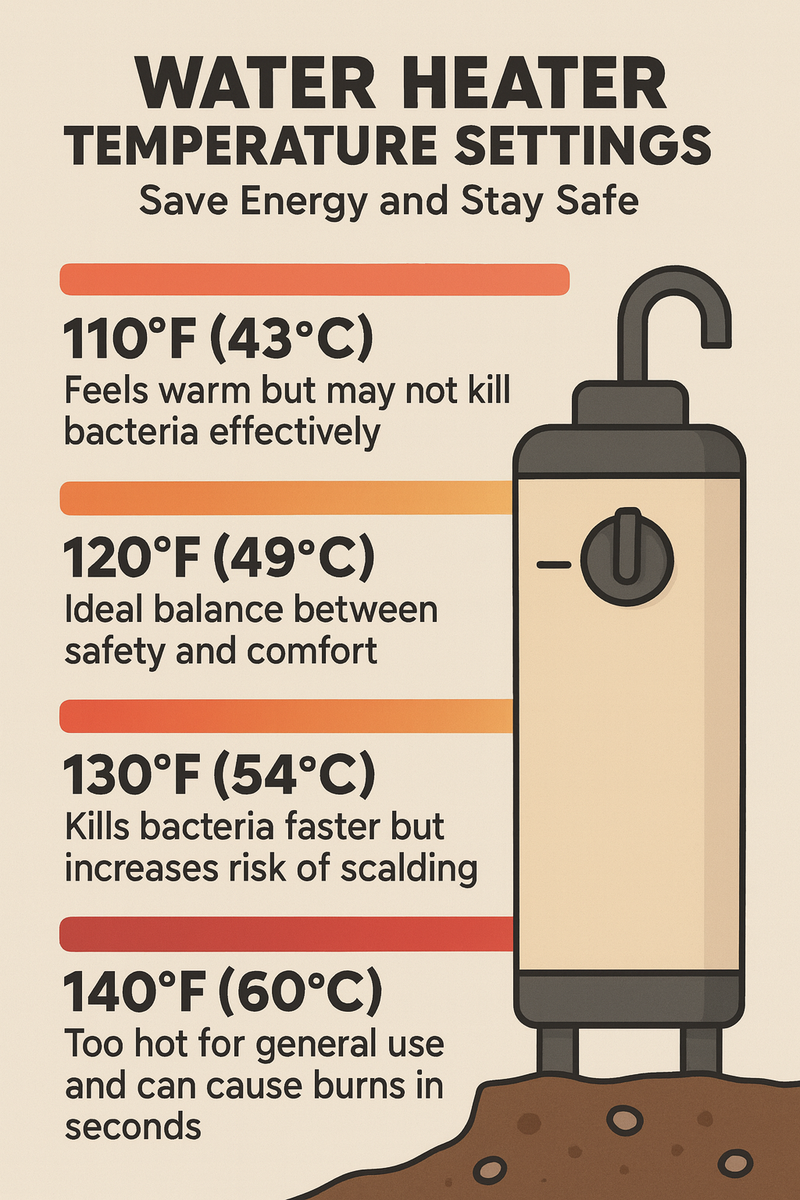
Here’s what happens at different temperatures:
- 110°F (43°C): Feels warm but may not kill bacteria effectively
- 120°F (49°C): Ideal balance between safety and comfort
- 130°F (54°C): Kills bacteria faster but increases risk of scalding
- 140°F (60°C): Too hot for general use and can cause burns in seconds
If you live with children or elderly family members, keeping your water heater set to 120°F is the safest choice.
Energy Efficiency and Cost Savings
Your water heater typically accounts for around 18 percent of household energy use. Adjusting the thermostat can significantly reduce utility costs without sacrificing comfort.
Here’s how a small change helps:
- Lowering from 140°F to 120°F can save 6 to 10 percent on your water heating costs
- You’ll reduce standby heat loss, the energy wasted keeping water hot when you’re not using it
- Your heater will last longer since it doesn’t need to work as hard
These savings may seem small monthly, but they add up over the year, especially if you have a large household.
Scald Prevention: Keeping Your Family Safe
Hot water burns can happen faster than most people realize:
- At 140°F, it takes just 5 seconds to cause third-degree burns
- At 120°F, it takes more than 5 minutes — a crucial difference for children and seniors
To further protect your family:
- Install anti-scald valves on taps and showers
- Test the temperature by running hot water for a minute, then use a thermometer at the faucet
- If it’s above 120°F, lower the thermostat slightly and test again the next day
How to Adjust Your Thermostat
Adjusting your water heater temperature setting is a simple DIY task, but the steps vary by type.
Electric Water Heater
- Turn off the power from the circuit breaker
- Remove the access panels and insulation
- Adjust the thermostat dial using a flathead screwdriver
- Set it to 120°F, replace the cover, and restore power
Gas Water Heater
- Locate the temperature control knob near the bottom
- Turn the dial to 120°F or “Warm”
- Wait a few hours, then test your tap water temperature
Always allow 24 hours for the system to stabilize before making further adjustments.
Maintaining Efficiency Beyond Temperature Control
Your thermostat isn’t the only factor affecting your heater’s performance. To keep your system efficient:
- Flush the tank annually to remove sediment buildup that causes inefficiency
- Inspect the anode rod every 2 to 3 years, as it prevents corrosion inside your tank
- Insulate your tank and pipes to minimize heat loss
- Fix leaks immediately, as even small drips can waste gallons daily
These maintenance habits not only improve energy efficiency but also extend your heater’s lifespan.
When to Call a Professional
If you notice fluctuating water temperatures, strange noises, or higher bills, it might be time for expert help. A licensed plumber can inspect your system, replace faulty thermostats, and recommend upgrades for better performance.
- Proactive maintenance is the most effective way to delay replacement and preserve the performance of your water heater. Here is what Good Clean Plumbing recommends:
- FlowCare+ Protect your home and keep life flowing with exclusive member perks. Enjoy lower dispatch fees, service discounts, and a complimentary yearly plumbing safety inspection with full system checks to detect issues early and save more.
- WaterHeater+ Protect that extra water heater in your home with an annual inspection and flush. This helps reduce sediment buildup, improve efficiency, and extend the lifespan of your system.
- Perform annual water heater flushes Sediment and minerals build up at the bottom of the tank and reduce heating efficiency. Flushing improves water quality and helps prevent overheating.
- Check your temperature settings Ensure the water heater is set to a safe and efficient temperature, ideally around 120 degrees Fahrenheit, to prevent scalding and reduce energy use.
- Inspect for leaks or rust Regularly check around the base and connections for signs of moisture, corrosion, or discoloration, which may indicate internal tank deterioration.
- Test the pressure relief valve This safety component should be tested once a year to ensure it opens properly and prevents excessive pressure buildup.
- Schedule professional maintenance yearly A licensed plumber should inspect your water heater annually to ensure all components are functioning correctly and to address issues before they become emergencies.
Setting your water heater temperature properly isn’t just about comfort. It’s about safety, savings, and efficiency. A simple thermostat adjustment to 120°F helps prevent burns, lower your energy bills, and ensure your water heater lasts for years to come.
Call us today at 512 309 5299
Schedule online at www.goodcleanplumbing.com
We deliver remarkable plumbing hospitality experiences built on clarity, quality, and genuine trust every single day.
Never Miss a Money-Saving Insight
Go From Plumbing Predicament to Perfection
From drips to drains, our fully licensed and insured experts have you covered.