

How a Water Heater Works and Common Issues to Watch For


How a Water Heater Works (and Common Issues to Watch For)
A water heater is one of the hardest working appliances in any household, quietly ensuring you have hot showers, clean dishes, and warm laundry every day. But how often do we stop to understand how it actually works?
Knowing the basics of your water heater helps you spot small problems early, maintain efficiency, and make informed choices when it is time for replacement.
This guide explains how a water heater works, the different types of hot water systems, the main parts you should know, and the common issues that can occur over time.
Understanding the Basics: How a Water Heater Works
At its core, a water heater does one job. It heats cold water and delivers it when you need it. While designs vary between electric, gas, and tankless systems, the principle remains the same. Cold water enters the tank, is heated to the set temperature, and flows out through your home’s plumbing system.
Here is a simple breakdown:
- Cold water inlet: Water enters the tank through a dip tube near the top and moves to the bottom where heating occurs.
- Heating mechanism: Depending on the model, either electric elements or a gas burner warms the water.
- Thermostat control: Once the desired temperature is reached, the system turns off to prevent overheating.
- Hot water outlet: Heated water naturally rises to the top of the tank and exits through the outlet pipe when you turn on a tap.
- Pressure relief valve: This safety feature releases water when the pressure inside the tank exceeds a preset limit.
In simple terms, your water heater continuously maintains a reservoir of hot water ready to flow whenever needed.
The Different Types of Water Heaters
Not all hot water systems are built the same. Let us explore the main types and how each one works.
1. Storage Tank Water Heater
This is the most common system found in homes. It features a large insulated tank that keeps water hot until needed.
How it works: The tank fills with cold water and heats it using gas or electric elements. When you open a hot water tap, warm water from the top is released, and the tank refills with cold water to be heated again.
Pros: Affordable, easy to install, reliable.Cons: Limited supply, energy loss from keeping water constantly hot (called standby heat loss).
2. Tankless or On Demand Water Heater
As the name suggests, this system heats water only when you need it, with no storage tank required.
How it works: When you turn on a hot water tap, cold water flows through a heat exchanger powered by gas or electricity, instantly producing hot water.
Pros: Energy efficient, saves space, provides endless hot water.Cons: Higher upfront cost, may need upgrades for larger households.
3. Heat Pump Water Heater or Hybrid
This type uses electricity to transfer heat from the surrounding air to the water, rather than generating heat directly.
How it works: A compressor and evaporator coil extract heat from the air and transfer it to the water in the tank.
Pros: Extremely energy efficient, lower operating cost.Cons: Higher initial cost, less effective in cold climates.
4. Solar Water Heater
Powered by the sun, this system uses solar panels to heat water stored in a tank.
How it works: Solar collectors absorb sunlight and convert it to heat that warms the water. A backup heater is often included for cloudy days.
Pros: Sustainable, reduces energy bills, eco-friendly.Cons: Dependent on sunlight, higher installation costs.
5. Condensing Water Heater
This model captures and reuses exhaust gases from natural gas systems to heat water more efficiently.
Pros: Great for households using natural gas, high efficiency.Cons: More expensive and complex to install.
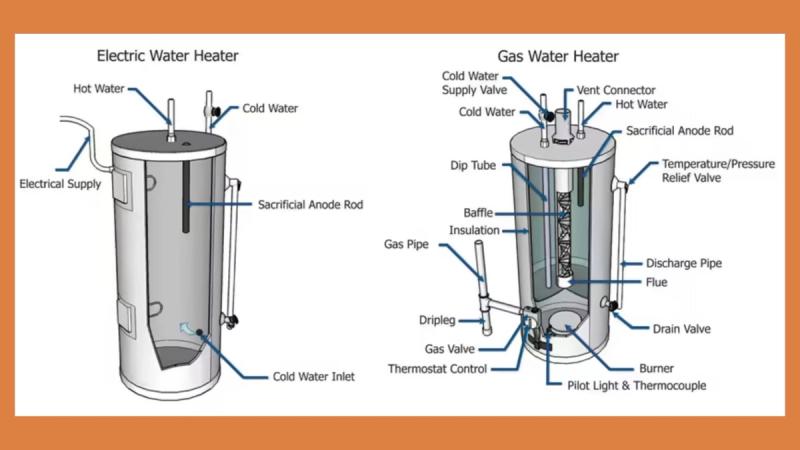
Water Heater Diagram: Parts You Should Know
Understanding the key water heater parts helps you identify issues before they become major repairs. Below is a quick overview of what is inside a traditional tank-type system:
- Dip Tube: Feeds cold water to the bottom of the tank.
- Anode Rod: Prevents corrosion by attracting minerals that would otherwise damage the tank.
- Heating Element or Burner: Heats the water using electricity or gas.
- Thermostat: Controls the water temperature.
- Drain Valve: Used for flushing sediment buildup.
- Pressure Relief Valve: Releases excess pressure.
- Insulation: Keeps water hot longer and reduces energy loss.
Common Water Heater Problems (and What They Mean)
Even with proper care, water heaters can develop issues over time. Here are the most common ones to watch for and what might be causing them.
1. No Hot Water
- Electric units: Faulty heating element or thermostat.
- Gas units: Pilot light or gas supply issue.
- Tankless systems: Mineral buildup or insufficient gas supply.
Quick fix: Check the power source or relight the pilot light. If the problem continues, call a licensed plumber.
2. Water Not Hot Enough
- Thermostat set too low (recommended temperature around 120°F or 49°C).
- Sediment buildup at the bottom of the tank.
- Failing heating element.
Pro tip: Flush your water heater at least once a year to maintain efficiency.
3. Leaking Water Heater
Leaks are usually caused by:
- Corrosion inside the tank.
- Faulty drain or pressure relief valve.
- Loose plumbing connections.
If the tank itself is leaking, replacement is often the only solution.
4. Strange Noises (Popping or Rumbling)
This usually means sediment buildup is trapping water beneath it, causing bubbling or boiling sounds.
Fix: Drain and flush the tank to remove sediment. If you have hard water, consider installing a water softener.
5. Discolored or Rusty Water
If your water has a reddish or metallic tint, the anode rod may be worn out, allowing rust to form inside the tank.
Replacing the anode rod is a simple and inexpensive way to extend the life of your water heater.
6. Low Hot Water Pressure
Mineral buildup in pipes or inside the heater can restrict flow. Regular maintenance such as flushing and descaling helps prevent this.
Routine Maintenance Tips to Extend Water Heater Life
A well maintained water heater can last eight to twelve years or longer for tankless models. Here is how to keep yours running efficiently:
- Flush the Tank Annually Remove sediment to improve performance and prevent overheating.
- Test the Pressure Relief Valve Lift the valve lever. If water does not flow freely, it may need replacement.
- Inspect the Anode Rod Every Two to Three Years Replace it once it is corroded or worn down.
- Adjust Temperature Settings Keep it around 120°F or 49°C for safety and energy savings.
- Check for Leaks and Corrosion Detecting problems early prevents costly damage.
- Insulate the Tank and Pipes Reduces heat loss, especially in colder areas.
- Schedule Professional Inspections A licensed plumber can ensure all components are working properly.
When to Replace Your Water Heater
Even the best maintenance cannot make a water heater last forever. Here are signs that it may be time for a new one:
- The tank is more than ten years old
- Frequent repairs or leaks
- Rusty or metallic tasting water
- Reduced hot water supply
- Increasing energy bills despite maintenance
If you notice these signs, upgrading to a more efficient model can save you money and improve performance.
Key Takeaways
- Understanding how a water heater works helps you identify small issues early.
- Routine maintenance such as flushing, valve testing, and checking the anode rod keeps your system efficient.
- The right hot water system depends on your energy source, household size, and budget.
- When problems occur, such as the heater not heating properly, act quickly to avoid bigger repairs.
Final Thoughts
Your water heater might not be glamorous, but it is essential for your comfort and convenience. By learning the basics and performing regular maintenance, you can enjoy consistent hot water and prevent sudden breakdowns.
If you are unsure about your system’s condition or need professional maintenance, do not wait until it fails. Schedule a check up today.
Need help with your water heater? Book a professional inspection or maintenance service today to keep your system running safely and efficiently.
Call us today at (512) 309 5299
Schedule online at www.goodcleanplumbing.com
Never Miss a Money-Saving Insight
Go From Plumbing Predicament to Perfection
From drips to drains, our fully licensed and insured experts have you covered.