

The Hidden Costs of Ignoring Small Plumbing Leaks


The hidden costs of plumbing leaks extend far beyond a higher water bill — a single dripping faucet wastes over 3,000 gallons of water per year, while an undetected slab leak or pipe corrosion issue can cause $5,000 to $20,000 in water damage, mold remediation, and foundation repair. With over 40 years of trade experience and 25+ years serving Central Texas homeowners, we have seen small plumbing leaks that went ignored transform into full-scale plumbing predicaments. This guide breaks down the specific cost categories so you can make an informed decision about when to call a professional and when that small drip becomes a big problem.
Water Waste: The Cost You Pay Every Month
A dripping faucet that loses one drop per second wastes approximately 3,153 gallons of water annually — enough to fill a small swimming pool. The dripping faucet cost adds $20 to $50 per year to your water bill for a single fixture. A running toilet, which often goes unnoticed, can waste 200 gallons per day, adding $70 to $150 per month to utility costs.
The financial impact compounds across multiple fixtures. A home with two slow leaks and a running toilet can waste 80,000+ gallons annually, translating to $500 to $1,200 in excess water charges before accounting for any property damage. Your water meter provides the first diagnostic tool — check the meter with all fixtures off, wait 2 hours, and check again. Any movement indicates an active leak somewhere in your system.
Key Takeaway: A single dripping faucet wastes 3,153 gallons per year ($20 to $50 in excess water costs), a running toilet wastes up to 200 gallons per day ($70 to $150/month), and multiple small leaks can combine to waste 80,000+ gallons annually at a cost of $500 to $1,200 before property damage.
Water Damage: From Drip to Disaster
Water damage from small plumbing leak damage progresses through predictable stages — each more expensive to repair than the one before it. The cost escalation is not linear; it is exponential as moisture reaches structural components and creates conditions for secondary damage.
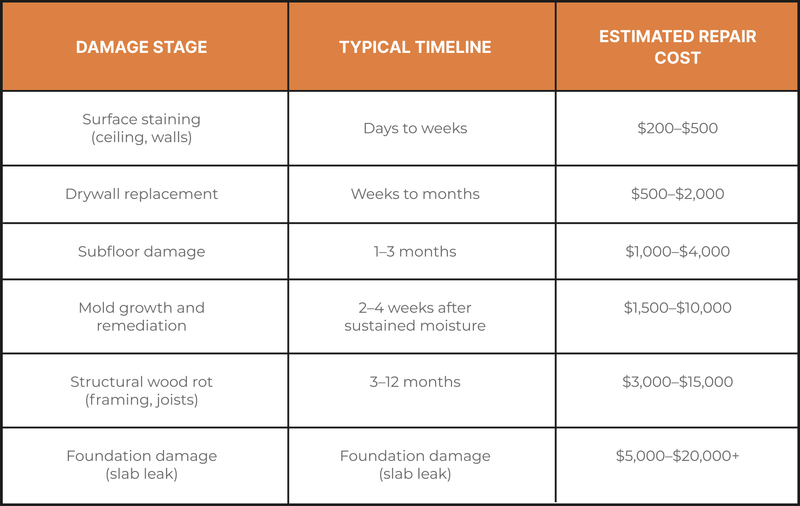
Mold growth begins within 24 to 48 hours of sustained moisture. Once mold colonizes wall cavities or subflooring, professional remediation is required — not just cleaning. Mold remediation for a single bathroom or kitchen area averages $1,500 to $4,000, with whole-house remediation reaching $10,000 for advanced cases.
We believe in doing the job correctly the first time — and that starts with catching leaks before they reach the drywall stage. Our 19-point plumbing inspection identifies active and developing leak sources so you go from plumbing predicament to perfection before costs escalate.
Key Takeaway: Water damage from plumbing leaks escalates from $200 surface staining to $20,000+ foundation repair over months — with mold growth beginning within 48 hours and remediation costing $1,500 to $10,000, making early leak detection the most cost-effective intervention.
Foundation Damage and Slab Leaks
A slab leak — a leak in the water supply or drainage pipes running beneath your home's concrete foundation — poses the most expensive risk from ignoring plumbing leaks. Slab leaks cause soil erosion beneath the foundation, leading to settling, cracking, and structural shifting that compromise the entire home.
Slab leak detection requires specialized equipment including acoustic listening devices and infrared cameras that identify moisture patterns beneath concrete. The water leak repair cost for a slab leak ranges from $2,000 to $6,000 for the pipe repair itself, with foundation repair adding $5,000 to $15,000 depending on the extent of structural damage.
In Central Texas — particularly in Austin, Cedar Park, Leander, and Round Rock — the expansive clay soils amplify slab leak damage because the soil swells when wet and contracts when dry, creating additional lateral pressure on foundations already compromised by water erosion. Homeowners in these areas should schedule a plumbing inspection at the first sign of unexplained water bill increases, damp spots on floors, or warm spots on the slab indicating a hot water line leak.
Key Takeaway: Slab leaks beneath concrete foundations cost $2,000 to $6,000 for pipe repair plus $5,000 to $15,000 for foundation repair — with Central Texas expansive clay soils amplifying damage through soil swelling cycles that stress already-compromised foundations.
Insurance Coverage: What Your Policy May Not Pay
Homeowner's insurance typically covers sudden and accidental water damage — a burst pipe, for example — but excludes damage resulting from long-term neglect or deferred maintenance. If your insurer determines that the damage resulted from a leak you knew about or should have detected through reasonable maintenance, the insurance claim denial leaves you responsible for the full repair cost.
Coverage specifics vary by policy, but the general pattern holds: sudden pipe bursts are covered, gradual leaks are not. Pipe corrosion damage, slow toilet supply line leaks, and chronic condensation issues almost always fall outside standard coverage. Adding a water damage endorsement or separate flood policy can close some gaps, but the most reliable protection remains proactive leak detection and timely repair.
Key Takeaway: Homeowner's insurance typically covers sudden water damage but denies claims for gradual leaks and deferred maintenance — making proactive plumbing inspection and timely repair the only reliable protection against out-of-pocket costs of $5,000 to $20,000+.
Frequently Asked Questions
How much water does a small leak waste?
A faucet dripping once per second wastes approximately 3,153 gallons per year. A running toilet can waste up to 200 gallons per day (73,000 gallons annually). We recommend checking your water meter with all fixtures off to identify hidden leaks before they show up on your water bill.
Can a small leak cause big damage?
A small plumbing leak can cause mold growth within 48 hours, drywall damage within weeks, and structural wood rot or foundation damage over months. The total repair cost can reach $15,000 to $20,000+ when a $150 to $300 repair could have resolved the issue at the source.
How much does a plumbing leak cost per month?
Monthly costs depend on leak severity: a dripping faucet adds $2 to $5/month in water charges, a running toilet adds $70 to $150/month, and an undetected slab leak can add $100 to $300/month before accounting for property damage that develops over time.
Should I fix a small plumbing leak?
Every small leak should be repaired promptly. A $150 to $300 faucet or supply line repair prevents water damage that can reach $5,000 to $20,000. We provide upfront, agreed-upon pricing so there are no surprises — just solutions that protect your home and your wallet.
Does homeowner insurance cover plumbing leaks?
Most policies cover sudden and accidental water damage (burst pipes) but exclude damage from gradual leaks and deferred maintenance. Document and repair leaks promptly to protect your coverage standing and avoid claim denial for maintenance-related damage.
Go From Plumbing Predicament to Perfection
The hidden costs of plumbing leaks — wasted water, mold, structural damage, foundation failure, and insurance gaps — consistently outweigh the cost of timely professional detection and repair. Every month a small leak goes unaddressed, the potential repair bill grows exponentially.
As a family-owned business with 25+ years in Central Texas, we bring the same meticulous craftsmanship to leak detection that we bring to every service call. Our vetted technicians arrive on time, use upfront pricing, and treat your home like we treat our own. Contact Us for an Estimate and let us help you protect your home before a small drip becomes a big predicament.
Never Miss a Money-Saving Insight
Go From Plumbing Predicament to Perfection
From drips to drains, our fully licensed and insured experts have you covered.